What Is Gold, Really
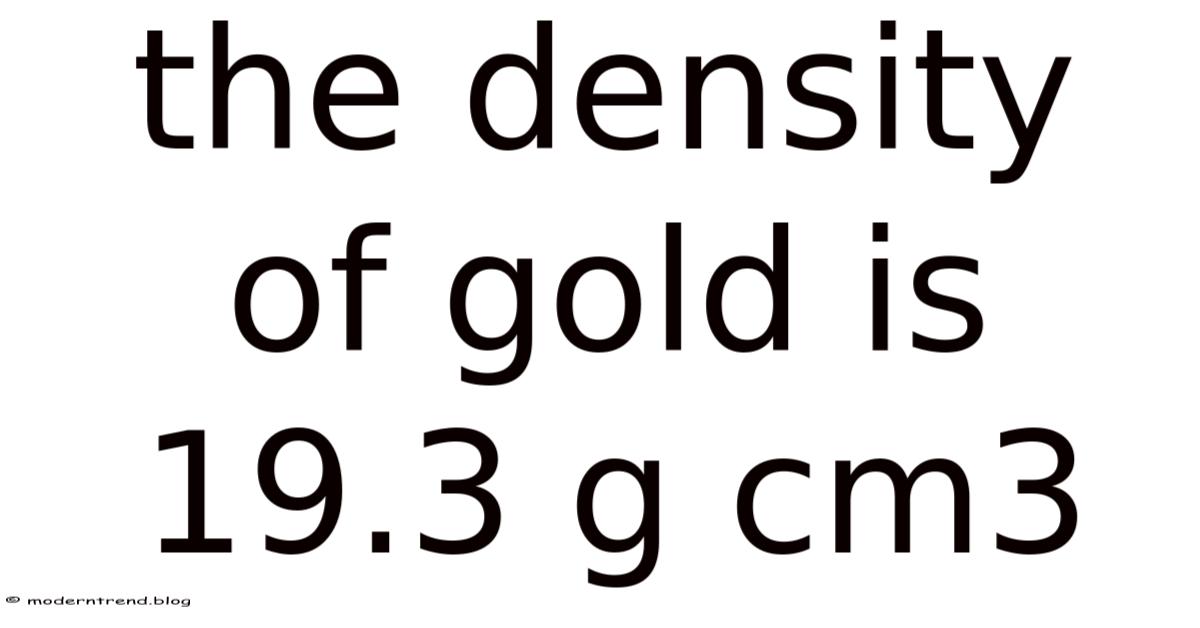
If you’ve ever wondered why a tiny gold nugget feels like a brick, the answer lies in the density of gold is 19.Even so, 3 g cm3. That number isn’t just a random figure tossed into a textbook; it’s the physical fingerprint of a metal that has fascinated humans for millennia. That said, gold isn’t just shiny, it’s heavy—heavier than most things you’ll ever hold. When you drop a gold coin into a glass of water, it sinks fast, and that sinking speed tells a story about how tightly its atoms are packed together.
Why That Number Matters
You might think a single decimal point can’t change much, but 19.3 g cm3 is a game‑changer in several fields. Practically speaking, in engineering, designers use the density to calculate how much gold will fit into a tiny connector or a micro‑chip contact. In jewelry, a high density means a small piece can carry a lot of weight, giving that satisfying “solid” feel people associate with luxury. Even in art, sculptors exploit the weight to balance their pieces, knowing that a gold leaf the size of a postage stamp can still feel substantial The details matter here..
This is the bit that actually matters in practice.
How Scientists Pin Down the Density
Measuring something that dense isn’t as simple as dropping it in a beaker and reading a number. And the classic method involves two steps: first, you find the mass of the gold sample using a precise scale. Then you submerge it in a graduated cylinder filled with water, record the volume of water displaced, and divide the mass by that volume. 3 grams per cubic centimeter. The result should hover around 19.Any deviation usually points to impurities or measurement error Worth keeping that in mind..
It sounds simple, but the gap is usually here Simple, but easy to overlook..
A more modern approach uses a technique called X‑ray diffraction. In real terms, by analyzing how X‑rays scatter off the gold atoms, researchers can infer the atomic packing factor, which directly ties into the material’s density. This method is especially handy when you need to verify the purity of a gold bar that’s supposed to be 24‑carat The details matter here..
This is where a lot of people lose the thread.
What Most People Get Wrong
A lot of folks assume that because gold is dense, it must be the heaviest metal out there. In real terms, 3 g cm3 only for pure, 24‑carat gold. Osmium and iridium actually edge out gold on the density scale, but they’re far rarer and far more difficult to work with. Another common myth is that all gold feels the same. Not true. Here's the thing — in reality, the density of gold is 19. Once you alloy it with copper, silver, or nickel, the overall density drops a bit, and the change can be enough to affect how a piece wears over time.
Real‑World Uses That Rely on That Heavy‑Feel
Jewelry Design
Jewelers love the weight of gold because it signals quality. A ring that feels like it has “substance” is often perceived as more valuable, even if the actual gold content is the same as a lighter piece. That tactile feedback is why many high‑end designers choose pure gold for engagement bands, despite the higher material cost The details matter here..
Electronics
Gold’s density isn’t the first thing you think about when you pick up a smartphone, but it matters a lot inside. Worth adding: gold plating on connectors provides a reliable, corrosion‑free surface that stays conductive even after thousands of insertions. Because the plating is so thin, engineers rely on the known density to calculate exactly how many atoms they’re laying down, ensuring consistent performance across devices The details matter here..
Investment and Bullion
When you buy a gold bar, the weight you see on the label is a direct result of its density. 8 cubic centimeters—roughly the size of a small chocolate bar. A 1‑kilogram bar of pure gold occupies about 51.Knowing the density helps buyers verify that the bar isn’t a counterfeit made from tungsten, which has a similar weight but a different density (19.25 g cm3, close but not identical) Simple, but easy to overlook..
Easier said than done, but still worth knowing.
Common Misconceptions
- “Gold is the heaviest metal.” To revisit, osmium and iridium surpass it, though they’re far less accessible.
- “All gold feels the same.” Alloys change the perceived weight, and even tiny variations in purity can shift the density enough to be noticeable to a trained hand.
- “You can’t measure density at home.” With a precise kitchen scale and a graduated container, you can get a rough estimate that’s surprisingly close to the official figure.
Practical Tips for the Curious
If you ever get your hands on a gold piece and want to test its authenticity, try this simple experiment:
- Weigh the item on a digital scale that reads to at least two decimal places.
- Fill a measuring cup with water, note the volume.
- Submerge the gold item completely, making sure no air bubbles cling to it.
- Record the new water level and subtract the original volume to find the displaced amount.
- Divide the mass by the displaced volume. If you land near 19.3, you’re probably looking at genuine gold.
Remember, the calculation works best with pure gold. If the piece is an alloy, the result will be lower, but the method still gives you a ballpark figure Easy to understand, harder to ignore..
FAQ
What does “g cm3” mean?
It’s a unit of density that stands for grams per cubic centimeter. In plain terms, it tells you how many grams of material fit into a cube that’s one centimeter on each side And that's really what it comes down to..
The allure of gold extends far beyond its shimmering appearance; its unique properties make it indispensable in craftsmanship and technology alike. Even when a lighter gold piece mimics the weight of a heavier one, the subtle differences in density still influence choices—especially in high‑end design where every gram counts. Inside devices, gold plating ensures durability and seamless connections, while in investment circles, understanding density helps verify authenticity and value Simple, but easy to overlook..
In everyday use, the same principles apply: a simple home experiment can reveal whether a gold item is genuine or an alloy, guiding you toward informed decisions. Whether you’re assessing a piece for a jewelry project or simply curious about material science, recognizing these nuances enriches your appreciation.
Easier said than done, but still worth knowing.
So, to summarize, gold’s superiority lies not just in its luster but in its precise characteristics—properties that shape its role across industries and personal preferences. Recognizing these aspects deepens our understanding and appreciation of this timeless metal Easy to understand, harder to ignore..
Conclude by emphasizing that mastering these details empowers you to make smarter choices, whether you're designing a piece or safeguarding your investment Took long enough..
By internalizing how density influences both form and function, you can fine‑tune designs to achieve the perfect balance between aesthetics and performance. A lighter alloy may allow a pendant to sit comfortably on the skin without pulling, while a denser composition can provide the structural integrity needed for precision components in aerospace or medical devices. Also worth noting, understanding the subtle shifts in mass helps you evaluate price‑to‑weight ratios, ensuring that you receive the best value for the material you select. This knowledge also supports sustainable practices; choosing the appropriate alloy reduces waste and minimizes the environmental footprint of production. In essence, mastering these details equips you to make smarter, more strategic decisions—whether you are crafting a masterpiece of jewelry, engineering a high‑tech component, or safeguarding a precious investment.
It sounds simple, but the gap is usually here.
The precision of this calculation becomes even more apparent when considering real-world applications, such as jewelry design or engineering projects where exact measurements dictate both appearance and function. By focusing on gold’s inherent density, you not only verify authenticity but also appreciate the nuanced balance it offers between beauty and strength.
When exploring materials, understanding these metrics helps bridge the gap between theoretical knowledge and practical execution. That's why for instance, knowing the density aids in estimating the volume of a piece, which is crucial when planning cuts or shaping. This insight also plays a role in conservation efforts, ensuring that historical artifacts or valuable items are assessed accurately without unnecessary damage.
Worth adding, the method remains adaptable, even when dealing with alloys, offering a reliable estimate that guides decisions without sacrificing efficiency. This versatility highlights gold’s enduring relevance, proving that mastery of such details elevates both craftsmanship and innovation No workaround needed..
To keep it short, the interplay of density and calculation reinforces why gold continues to be a favored choice across diverse fields. Embracing these concepts empowers you to figure out complexity with confidence Practical, not theoretical..
Conclude by recognizing that such understanding transforms simple observations into informed choices, reinforcing the value of precision in both art and science.
